
According to the data from market analytics firm JATO Dynamics, non-metro urban markets added 389,401 vehicles during the 10-month period. This was more than the combined addition of 161,965 in rural markets and 155,698 in metros.

'Indiscriminately withdrawing these drugs could lead to a worsening of other associated conditions.'

The Bajaj Group is building a healthcare business that aims to make money by keeping patients healthy rather than depending on hospital admissions.

Nine in 10 Indian consumers use health apps or wearable devices, while 81 per cent are willing to pay more for devices offering reliable data reviewed by healthcare professionals.
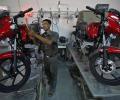
Bajaj Auto received the highest incentive payout under the government's Production-Linked Incentive (PLI) scheme for automobiles and auto components in FY26, securing approximately 625.65 crore. Despite exceeding investment targets, the scheme has significantly underperformed in job creation and incremental sales, generating only 46% of projected jobs and 23% of targeted sales by March 2026.
India's leading two-wheeler manufacturers, including TVS Motor, Bajaj Auto, and Hero MotoCorp, are preparing for a deceleration in growth during the second half of financial year 2026-27 (H2FY27). This anticipated slowdown is attributed to a high base effect from last year's GST rate cut, inconsistent rural demand, and a growing disparity between premium and entry-level segments.

While many people meticulously calculate their retirement savings, they often overlook how they will actually spend the decades that follow.
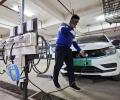
The Indian government has made electric vehicles (EVs) the default choice for staff car procurement across ministries and departments, setting a higher price cap of 20 lakh for EVs compared to 10 lakh for ICE vehicles. Concurrently, new guidelines have been issued for procuring electronic devices, incentivising 'Make in India' products with a higher price ceiling.
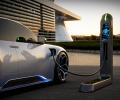
Electric passenger vehicle registrations in India surged by nearly 75 per cent year-on-year in October, significantly cushioning the 14.6 per cent contraction in the overall passenger vehicle market. This growth was particularly beneficial for manufacturers like Tata Motors and Mahindra, whose EV sales helped offset sharper declines in conventional internal combustion engine (ICE) vehicle registrations.

Tata Motors is maintaining its lead over Mahindra & Mahindra in the race for the second position in India's passenger vehicle market, largely driven by its strong performance in electric vehicle sales. Both companies are aggressively expanding their SUV and EV portfolios and scaling up production to meet surging demand, indicating a fierce competition ahead.

Mercedes-Benz CEO Ola Kllenius believes India is poised to become a significant manufacturing and export hub for the luxury carmaker, citing the country's growing market, supplier ecosystem, and engineering capabilities. The company also anticipates electric vehicles (EVs) will constitute a substantial 20% of its India sales by 2027.

Corporate governance advisory firm InGovern Research Services has stated in a new report that a documented family arrangement should not be reopened solely due to changes in business valuations, specifically addressing the ongoing succession dispute within the Venu Srinivasan family of the TVS group.
Electric vehicle (EV) sales in India are growing faster than the industry's ability to produce and deliver them, leading to supply shortages at dealerships during the peak festival season. This surge in demand is attributed to rising conventional fuel prices, making EVs a more attractive option for cost-conscious buyers.

Luxury car buyers in India are spending lakhs -- and sometimes crores -- to make their cars truly their own, turning personalisation into a growing business opportunity for automakers.

More patients can now afford semaglutide, but the early excitement around the drug is fading.

Dedicated Ayush dispensaries increased from 26,130 in 2013-2014 to 37,804 in 2024-2025, while hospitals rose much more slowly, from 3,605 to 3,885.

India's entry-level passenger vehicle market is experiencing a significant recovery, with mini car wholesales surging 86.3 per cent year-on-year in the first half of FY27, driven by improved affordability and stronger overall demand.

'The larger lesson for India Inc is that promoter oversight and professional management are not inherently contradictory. The difficulty arises when the boundaries between the two are unclear.'

The proposal caught auto makers by surprise.

India's sedan market is experiencing a notable divergence: affordable entry-level sedans are gaining market share, while midsize sedans are seeing a significant decline as buyers increasingly opt for SUVs in higher price brackets.
